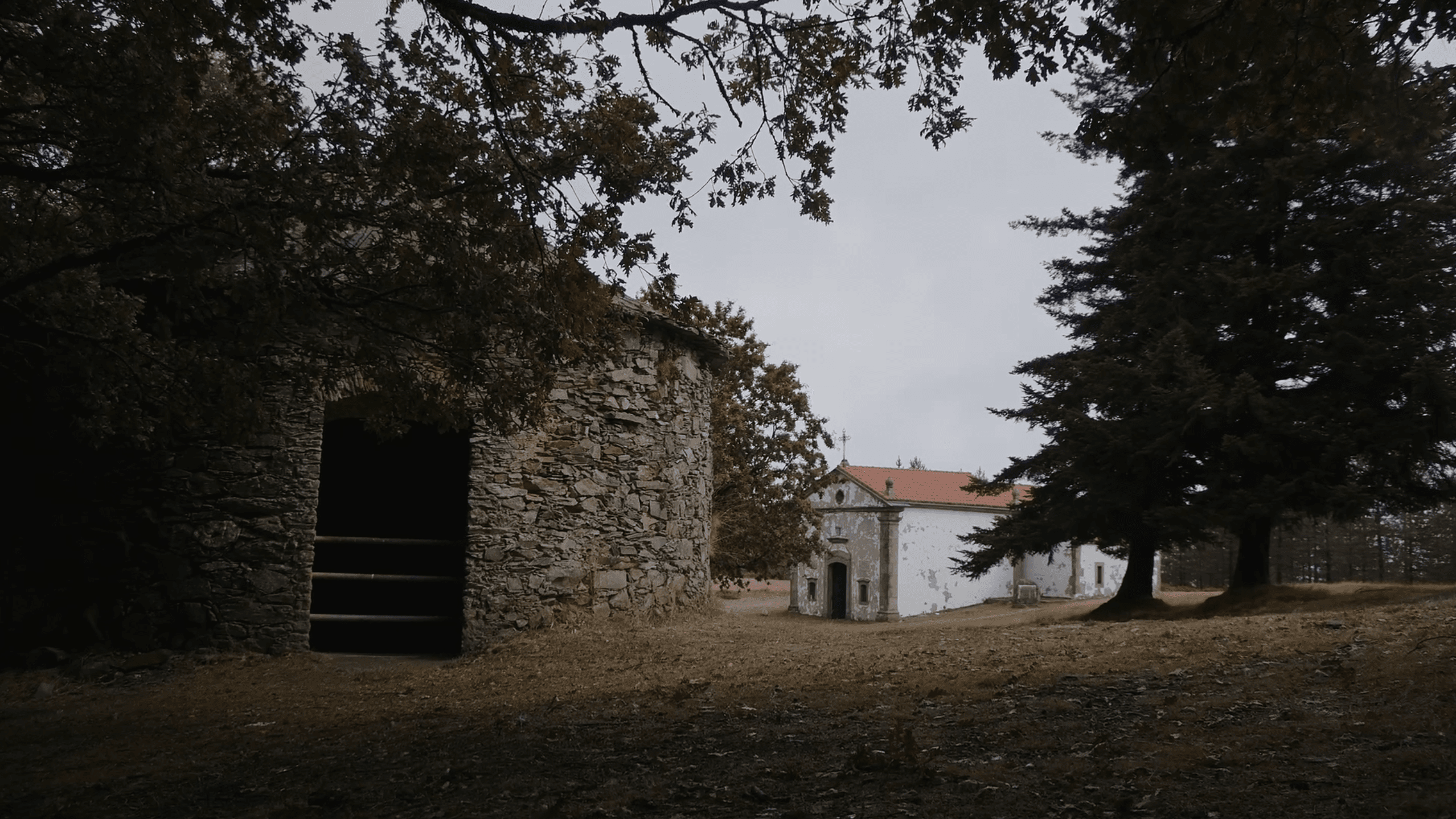
The Royal Ice Factory of Coentral is located on Cabeço do Pereiro, the second highest peak of the Lousã mountains, at around 1,150 meters of altitude. Here, a peculiar activity developed in our country: the business of snow collection, stored in wintertime wells, and the transport of ice to Lisbon, used during the summer for making ice cream and refreshing drinks, served in the sophistication of the Royal House and in the luxurious taverns of Lisbon. Besides these uses, snow was also employed for food preservation and in the hospital treatment of certain illnesses.
Snow was collected using rudimentary tools (shovels, rakes, and scrapers) and transported in baskets carried on the head to the wells, where it was dumped. Several layers were compacted, each about 40 to 50 centimeters thick, interleaved with a straw mat. Two men would then pound the snow with heavy wooden mallets until the wells were filled.
In his accounts of travels to Portugal between 1797 and 1799, the distinguished German naturalist and botanist Heinrich Friedrich Link described the snow transport process: “(...) To transport the snow, it is placed in baskets outside the warehouse [well]. Then it is pressed in elongated molds composed of two pieces, to divide it. After the snow has been pressed, it is removed from the mold and wrapped in straw and canvas; then it is loaded onto carts. Transport takes place only at night (...). Every day, loads of snow leave from here, taking the Espinhal and Valada roads and then descending the Tagus River to Lisbon. Snow is also transported to Coimbra.”
Joaquim Ferreira, a researcher of snow-related work, notes that the snow loads dispatched from Cabeço do Pereiro took about five days to reach Lisbon, including transshipment at the river ports of Constância or Barquinha, with losses ranging between 35% and 50%. To facilitate the transport of snow—which was both slow and costly—royal permits granted broad privileges to snow contractors, giving “orders to all civil and military authorities to provide the contractor, for ice transportation, with carts, personnel, and boats, as well as provisions, all at the usual or fair prices...”
Commissioned by the chief snow contractor Julião Pereira de Castro, the chapel dedicated to Saint Anthony was inaugurated in 1786.
The ensemble formed by the Ice Wells and the Chapel of Saint Anthony is classified as Category IIP – Property of Public Interest, under Decree-Law no. 1/86, DR, 1st series, no. 2 of January 3, 1986.