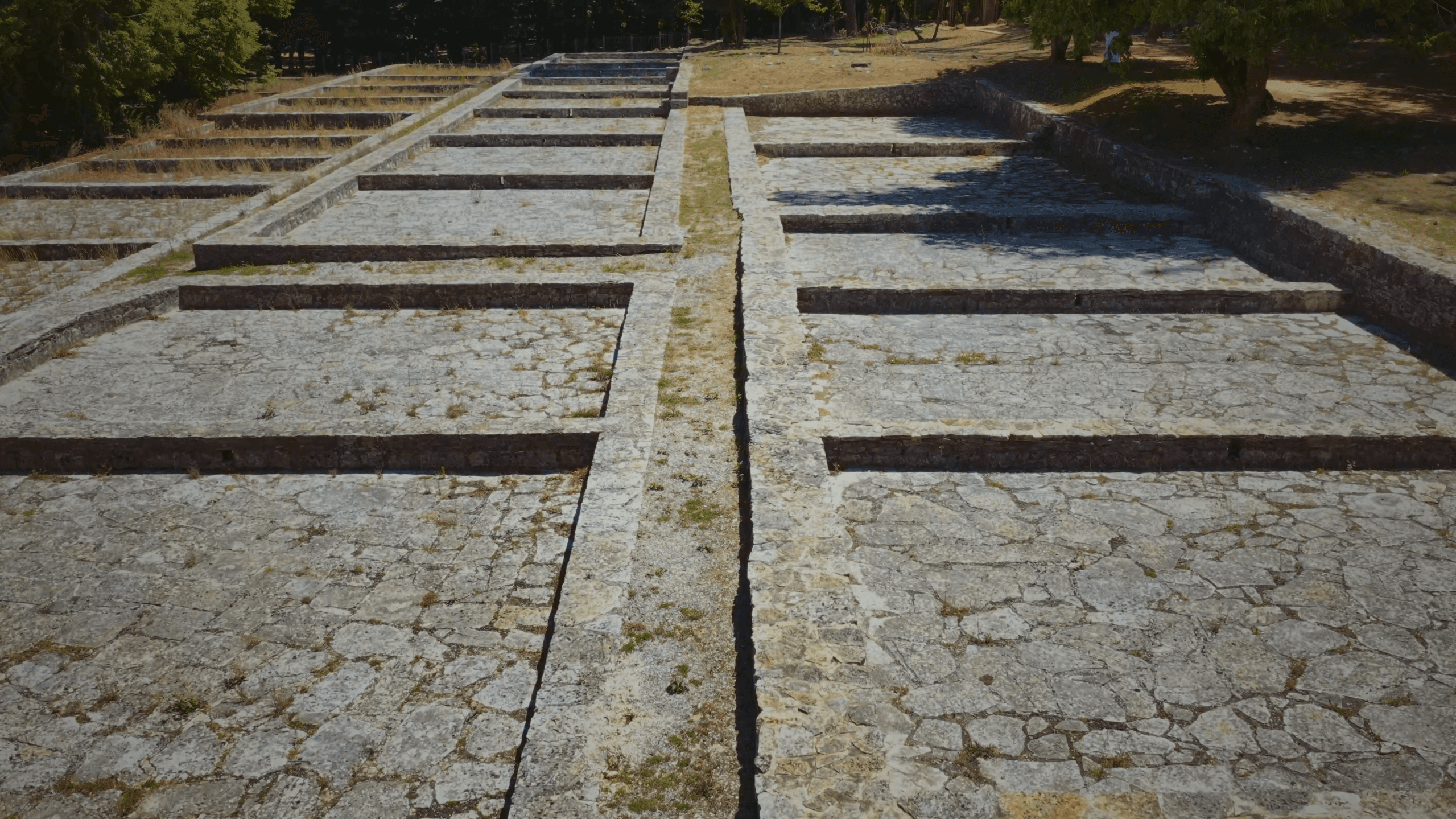
The Real Fábrica do Gelo is a unique landmark of Portuguese industrial archaeology, representing a remarkable example of pre-industrial technology applied to the production of natural ice. Built in the 18th century, it emerged to overcome the difficulties of regularly supplying snow from Serra da Estrela and Coentral (Serra da Lousã), in response to the growing demand for ice in the capital.
The ice was intended for cooling drinks, making ice creams, and hospital use, being especially valued by the wealthier classes. The habit of enjoying ice creams and cooling down with cold drinks is believed to have been introduced to Portugal by the court of Philip II, originally from Spain, and quickly became rooted in the customs of the urban elites.
The first documentary reference to the construction of the Real Fábrica do Gelo dates back to 1741. In 1782, a new phase of expansion began, following enlargement works carried out by one of the factory’s most prominent owners, the “neveiro” (ice supplier) Julião Pereira de Castro. The factory stands out from similar structures in Europe, such as those in France or Spain, due to the size of its ice pits, the ingenious water-lifting and storage system, and the natural freezing method adapted to the mild climate of the region. The complex represents one of the most sophisticated forms of ice production before the industrial era.
The Real Fábrica do Gelo was organized into three main areas:
-
Water Collection and Elevation Area It included two wells, a waterwheel house, and a tank with a capacity of about 151,000 liters, intended for storing and distributing water to the ice pits. A second large reservoir complemented the system.
-
Freezing Tanks or Ice Pits Sequentially arranged, these shallow tanks allowed water to circulate between the different pits. In its final phase, the factory had an additional area of ice pits. It was in these tanks that water (about 10 to 15 cm deep) was left to freeze. The ice was manually collected at dawn and prepared for storage.
-
Storage and Expedition The conservation area included two main storage wells, one of them with a capacity of 346 m³, where the ice was compacted to minimize losses. There was also a room where the ice was cut and packed, and a third well where the prepared ice was kept before shipment.
Transporting the ice produced at the Real Fábrica do Gelo was a complex logistical operation, especially due to the lack of fast transport routes to ensure distribution to Lisbon, essential to supply the royal court and certain establishments in the capital, particularly during the hottest months. To alleviate these difficulties, the royal household granted privileges and benefits to the professionals responsible for transportation as a form of incentive and compensation. The route began on the southern slope of the Montejunto mountain, where the ice was carefully packed and prepared for the journey. The cargo then traveled overland to the quay at Vala do Carregado, continuing by river to Lisbon.
The Real Fábrica do Gelo ceased operations in 1885, replaced by the industrialization of new artificial ice production technologies. However, its legacy lives on. Classified as a National Monument since 1997 (Decree no. 67/97, Diário da República, 1st series, no. 301, December 31), this remarkable example of Portuguese industrial heritage is today a visitable site, set within a landscape of great natural beauty. A visit to the Real Fábrica do Gelo is a true journey through time — where history, nature, and human ingenuity meet in a unique setting in Portugal.